Article Plan: “Many Pages in a Travel Guide NYT Crossword”
This article dissects the NYT crossword clue‚ “Many pages in a travel guide‚” revealing “MAPS” as the solution. We’ll explore the clue’s context‚
historical map usage‚ and digital advancements‚ alongside puzzle-solving strategies.
The New York Times Crossword is a daily intellectual challenge enjoyed by millions‚ often sparking curiosity about the reasoning behind its clues. Recently‚ the clue “Many pages in a travel guide” appeared‚ prompting solvers to consider various possibilities. The correct answer‚ MAPS‚ seems straightforward upon revelation‚ but understanding why it fits requires a deeper dive into the world of travel literature and cartography.
This article will meticulously examine this particular crossword puzzle element. We’ll unravel the connection between travel guides and maps‚ exploring their symbiotic relationship. Beyond simply identifying the answer‚ we aim to illuminate the thought process behind it‚ offering insights for both seasoned crossword enthusiasts and newcomers alike. The clue’s simplicity belies a rich history and practical application.
The NYT Crossword and Travel Themes
The New York Times Crossword frequently incorporates themes relating to travel‚ geography‚ and culture‚ reflecting the broad interests of its solvers. These clues often tap into common travel experiences – landmarks‚ modes of transportation‚ or essential travel items. The inclusion of travel-related content isn’t accidental; it broadens the puzzle’s appeal and provides accessible entry points for a diverse audience.
The NYT offers dedicated puzzle books‚ like “Easy Crosswords for the Plane‚ Train‚ Car or Bar‚” demonstrating a recognized demand for portable entertainment during journeys. Clues like “Many pages in a travel guide” capitalize on this association‚ prompting solvers to recall elements integral to the travel experience. This thematic consistency enhances the puzzle’s overall cohesiveness and enjoyment.
Understanding the Clue: “Many Pages in a Travel Guide”
The clue “Many pages in a travel guide” is deceptively simple‚ relying on a solver’s understanding of what fundamentally constitutes a travel guide. While guides contain text describing destinations‚ the core function – and a significant portion of their pages – is visual representation. The phrasing “many pages” steers solvers away from singular items like a “cover” or “index‚” hinting at a plural‚ substantial component.
The clue’s effectiveness lies in its indirectness. It doesn’t explicitly ask for a visual aid; it focuses on the quantity of pages dedicated to that aid. This requires a shift in perspective‚ moving beyond the textual content to consider the guide’s primary purpose: to visually orient the traveler. Recognizing this is key to unlocking the solution.
The Answer: “MAPS” ー A Detailed Look
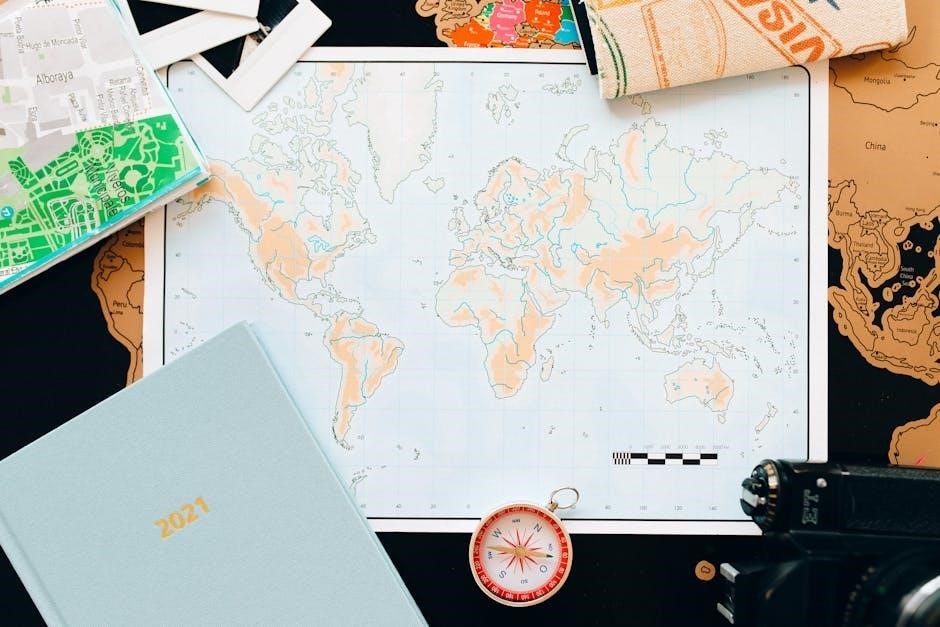
“MAPS” is the definitive answer to the “Many pages in a travel guide” NYT crossword clue. Travel guides‚ historically and presently‚ dedicate a substantial portion of their pages to cartographic representations. These aren’t merely decorative; they are integral to the guide’s utility‚ providing crucial navigational and contextual information.
The plural form‚ “MAPS‚” directly addresses the clue’s emphasis on “many pages.” A single map wouldn’t typically occupy a significant number of pages. Instead‚ guides include various maps – road maps‚ city plans‚ topographical representations – each requiring its own dedicated spread. The answer’s brevity and common usage further solidify its fit within the crossword’s constraints.
Why “MAPS” is the Correct Solution
“MAPS” logically fulfills the clue’s requirement because travel guides fundamentally rely on visual spatial data. Unlike textual descriptions‚ maps offer an immediate‚ comprehensive overview of a destination. The clue specifically asks for “many pages‚” and maps‚ due to their detailed nature and the need for legibility‚ inherently consume significant page real estate within a travel guide.
Alternative answers‚ such as “pictures” or “text‚” are too broad. While present in guides‚ they don’t uniquely define a substantial portion of the content. “MAPS” is precise; it directly links to a core component of travel guide functionality. The answer’s succinctness also aligns with crossword puzzle conventions‚ favoring concise and direct solutions.

The Role of Maps in Travel Guides
Maps are indispensable to travel guides‚ functioning as the primary tool for orientation and exploration. They visually represent geographical locations‚ landmarks‚ and routes‚ enabling travelers to understand spatial relationships and plan itineraries effectively. Beyond basic navigation‚ maps within guides often highlight points of interest‚ historical sites‚ and local amenities.
Historically‚ maps were painstakingly created and represented significant investments in travel guide production. Today‚ they remain crucial‚ even with digital alternatives. High-quality maps enhance the user experience‚ providing a tangible connection to the destination. They allow for offline planning and offer a broader contextual understanding than solely relying on GPS or digital interfaces.
Historical Context of Maps in Travel
The history of maps in travel is deeply intertwined with exploration and commerce. Early travel accounts often included rudimentary maps‚ hand-drawn and prone to inaccuracies‚ yet vital for conveying routes and discoveries. As cartography advanced‚ maps became more detailed and reliable‚ appearing in early iterations of travel guides like those produced during the Grand Tour era.
Before standardized road networks‚ maps were essential for navigating unfamiliar territories. The inclusion of maps signaled a guide’s value and credibility. Throughout the 19th and 20th centuries‚ publishers invested heavily in mapmaking‚ recognizing their importance to travelers. These maps weren’t merely navigational tools; they were windows into different cultures and landscapes.
Evolution of Mapmaking for Travelers
Mapmaking for travelers has undergone a dramatic evolution‚ mirroring technological advancements. Initially‚ maps were painstakingly created by hand‚ relying on surveying and observation. The advent of printing allowed for wider distribution‚ though accuracy remained a challenge. Later‚ lithography enabled more detailed and colorful maps to be included in travel guides.
The 20th century saw the rise of aerial photography and satellite imagery‚ revolutionizing map accuracy and detail. This led to the development of road atlases and increasingly sophisticated city maps. Today‚ digital mapping technologies – GPS‚ GIS‚ and interactive online maps – dominate travel planning. However‚ the fundamental purpose remains: to visually represent space and aid navigation‚ a legacy reflected in the NYT crossword clue.
Types of Maps Found in Travel Guides
Travel guides traditionally feature a diverse range of map types‚ each serving a specific purpose for the traveler. Road maps and navigation charts are essential for plotting routes and understanding distances. Topographical maps illustrate elevation changes‚ crucial for hikers and outdoor enthusiasts.
City maps and street indexes provide detailed layouts of urban areas‚ pinpointing landmarks‚ hotels‚ and points of interest. These often include public transportation networks. More specialized maps might showcase historical sites or regional attractions. The inclusion of these “many pages” – maps – within a travel guide directly relates to the NYT crossword clue’s solution. Their variety underscores the importance of visual spatial information for effective travel.
Road Maps and Navigation
Road maps within travel guides are fundamental for planning journeys‚ displaying major highways‚ secondary roads‚ and distances between destinations. They often incorporate symbols indicating services like gas stations‚ restaurants‚ and lodging. Historically‚ these were folded‚ large-format maps‚ now increasingly supplemented by digital versions.
Navigation is greatly enhanced by these visual aids‚ allowing travelers to understand the overall route and anticipate potential challenges. The “many pages” dedicated to road networks directly address the NYT crossword clue. Modern travel guides may also include simplified route overviews or QR codes linking to GPS navigation apps‚ bridging the gap between traditional cartography and contemporary technology.
Topographical Maps
Topographical maps‚ frequently found within comprehensive travel guides‚ illustrate terrain features using contour lines‚ showcasing elevation changes like hills and valleys. These maps are crucial for hikers‚ cyclists‚ and anyone engaging in outdoor activities‚ providing insights into the physical landscape. They differ significantly from simple road maps‚ offering a more detailed representation of the environment.
The inclusion of topographical maps contributes to the “many pages” aspect of the NYT crossword clue. While not always present in every guide‚ their presence signifies a focus on exploration beyond major roadways. These maps often detail trails‚ forests‚ and water bodies‚ aiding in route planning and understanding the geographical context of a destination.

City Maps and Street Indexes
City maps and accompanying street indexes are staples within travel guides‚ often consuming a substantial number of pages. These detailed charts illustrate street networks‚ landmarks‚ and points of interest within urban areas‚ enabling travelers to navigate efficiently. Street indexes‚ typically alphabetical listings‚ allow quick location of specific addresses or businesses.
The sheer volume of detail in city maps directly relates to the “many pages” element of the NYT crossword clue. Larger cities necessitate extensive mapping‚ contributing significantly to a guide’s overall page count. Modern guides frequently include public transportation routes‚ pedestrian zones‚ and highlighted attractions‚ further expanding the map’s scope and complexity.
The New York Times Crossword Puzzle
The New York Times Crossword is a globally recognized word puzzle celebrated for its clever clues and challenging vocabulary. Published daily‚ it attracts a diverse range of solvers‚ from casual enthusiasts to dedicated experts; The puzzle’s format typically features a 15×15 grid‚ though variations exist in smaller puzzle collections like the “Easy Crosswords for the Plane‚ Train‚ Car or Bar” edition.
The inclusion of travel-related clues‚ such as “Many pages in a travel guide‚” is a recurring theme. These clues often tap into common travel experiences and knowledge‚ testing solvers’ familiarity with geography‚ landmarks‚ and travel essentials. The NYT crossword’s reputation for quality and intellectual stimulation contributes to its enduring popularity.
NYT Crossword Difficulty Levels
The New York Times Crossword offers puzzles across a spectrum of difficulty‚ catering to various skill levels. Monday puzzles are generally the easiest‚ gradually increasing in complexity throughout the week‚ peaking with Saturday’s notoriously challenging grid. Sunday puzzles are larger and often feature themed content‚ presenting a different kind of challenge.

The “Many pages in a travel guide” clue likely appeared in a Monday or Tuesday puzzle‚ given its relatively straightforward nature. These earlier-week puzzles prioritize accessibility‚ employing common words and familiar concepts. The NYT categorizes puzzles‚ and collections like the “Easy Crossword Puzzle Omnibus Volume 15” specifically target beginner or casual solvers seeking a less daunting experience.
Frequency of Travel-Related Clues
Travel-related clues appear frequently in the NYT Crossword‚ reflecting the universal appeal of exploration and geography. These clues often encompass destinations‚ landmarks‚ modes of transportation‚ and‚ crucially‚ navigational tools like maps. The prevalence stems from the rich vocabulary associated with travel‚ offering diverse possibilities for wordplay and clever misdirection.
Clues like “Many pages in a travel guide” tap into this theme‚ leveraging the common association between travel and maps. The NYT frequently publishes themed puzzles‚ and travel is a recurring motif. The availability of puzzle books specifically for travel – “The New York Times Easy Crosswords for the Plane‚ Train‚ Car or Bar” – underscores this connection and suggests a consistent demand for such content among solvers.
Other Possible Answers Considered (and Why They’re Incorrect)
When tackling “Many pages in a travel guide‚” several alternative answers might initially seem plausible. “ITINERARIES” suggests a detailed travel plan‚ but lacks the brevity expected in a crossword solution. “PICTURES” represents visual content often found in guides‚ yet doesn’t encapsulate the core function of orientation. “REVIEWS” offer information‚ but aren’t physically within the guide itself.

“INDEXES‚” while present in travel guides‚ are too specific; the clue implies a more substantial component. The key lies in the clue’s emphasis on “pages” – suggesting something that fills many pages‚ not just a section. Ultimately‚ these alternatives fail to capture the fundamental role of visual representation and spatial information that “MAPS” provides‚ making it the only logically and structurally sound answer.
Common Misconceptions About the Clue
A frequent misunderstanding surrounding “Many pages in a travel guide” centers on interpreting “pages” literally as text. Solvers often focus on written content – descriptions‚ historical details‚ or recommendations – overlooking the visual dominance of maps within travel guides. Another misconception is assuming a complex answer; the NYT crossword often favors concise solutions.
Some believe the clue alludes to digital travel guides‚ leading them to consider “LINKS” or “APPLICATIONS.” However‚ the phrasing evokes traditional‚ physical guides where maps are a primary feature. The clue isn’t about accessing information‚ but the information contained within the guide itself. Recognizing this distinction is crucial to avoiding these common pitfalls and arriving at the correct answer: “MAPS”.
Strategies for Solving Similar Crossword Clues
When encountering clues referencing broad categories like “travel” or “guides‚” think about core components. Instead of focusing on the entire experience‚ identify essential elements. For “Many pages in a travel guide‚” consider what universally defines a travel guide – it’s the maps! Look for clues employing synonyms or indirect phrasing. “Many pages” isn’t literal; it’s a descriptive hint.
Utilize cross-referencing. Filling in intersecting answers can provide valuable letters and context. Don’t be afraid to brainstorm multiple possibilities‚ but prioritize concise answers. Finally‚ remember the NYT crossword often favors common knowledge; avoid overly obscure solutions. Applying these strategies will enhance your ability to tackle similar clues effectively.
Travel Guide Publishers and Their Map Quality
Reputable travel guide publishers prioritize cartographic accuracy and detail. Lonely Planet consistently delivers clear‚ informative maps focusing on practical navigation and points of interest. Their maps often include transportation networks and key landmarks. National Geographic Maps are renowned for their aesthetic quality and topographical detail‚ offering a broader geographical understanding.
Michelin Maps‚ historically focused on automotive travel‚ provide exceptionally detailed road maps with precise route planning information. These publishers understand that maps are integral to the travel experience. The quality of maps directly impacts user satisfaction and reflects the publisher’s commitment to providing valuable resources. Choosing guides with superior cartography enhances trip planning and on-the-ground exploration.
Lonely Planet Maps
Lonely Planet maps are celebrated for their practicality and focus on traveler needs. They prioritize clarity‚ showcasing essential information like transportation routes‚ accommodation locations‚ and key attractions. These maps aren’t just aesthetically pleasing; they’re designed for efficient navigation. Lonely Planet consistently updates its cartography‚ reflecting changes in infrastructure and points of interest.
Their maps often feature a balance between detailed street-level views in urban areas and broader regional overviews. This approach caters to diverse travel styles‚ from backpacking adventures to city explorations. Lonely Planet understands that reliable maps are crucial for independent travel‚ empowering users to confidently explore new destinations. The maps are a core component of their popular travel guides.
National Geographic Maps
National Geographic maps are renowned for their stunning visual quality and meticulous detail. They go beyond basic navigation‚ offering a rich geographical and cultural context. National Geographic emphasizes accuracy and cartographic artistry‚ creating maps that are both informative and beautiful. Their maps often include topographical features‚ highlighting elevation changes and landforms.
These maps frequently incorporate information about local ecosystems‚ historical sites‚ and points of cultural significance. National Geographic’s commitment to exploration and research translates into maps that are deeply insightful. They are a valuable resource for travelers seeking a deeper understanding of the places they visit. The maps are often considered collector’s items due to their quality and artistry.
Michelin Maps

Michelin maps are celebrated for their practicality and detailed road networks‚ initially developed to support automobile travel. Michelin’s cartography focuses on providing drivers with clear and accurate navigational information. Their maps are known for their distinctive color-coding system‚ indicating road types and conditions. Beyond roads‚ Michelin maps include points of interest‚ such as hotels‚ restaurants‚ and historical landmarks.
Michelin also pioneered the star rating system for restaurants‚ integrating this information directly onto their maps. This makes them a comprehensive resource for culinary exploration alongside travel. The maps are regularly updated to reflect changes in road infrastructure and points of interest. Michelin’s dedication to quality and user-friendliness has made their maps a trusted companion for generations of travelers.
The Future of Maps in Travel Guides
The future of maps within travel guides is rapidly evolving‚ shifting from traditional paper formats to dynamic digital experiences. Augmented Reality (AR) is poised to revolutionize how we interact with maps‚ overlaying digital information onto the real world through smartphone cameras. Interactive maps allow users to customize routes‚ explore points of interest in 3D‚ and access real-time updates on traffic and local events.
Digital maps offer advantages like searchability‚ scalability‚ and the ability to integrate user-generated content. However‚ the tactile experience and reliability of physical maps still hold appeal. A hybrid approach‚ combining the best of both worlds‚ seems likely. Expect more personalized map experiences‚ driven by AI and data analytics‚ catering to individual travel preferences.
Digital Maps vs. Physical Maps
The debate between digital and physical maps continues‚ each offering distinct advantages for travelers. Digital maps‚ accessible via smartphones and GPS devices‚ provide real-time updates‚ search functionality‚ and route optimization. They’re easily updated and offer a wealth of information‚ including user reviews and points of interest. However‚ they rely on battery life and data connectivity.
Physical maps‚ like those found in traditional travel guides‚ are independent of technology and offer a broader overview of a region. They’re reliable in areas with limited connectivity and provide a tactile experience. While the NYT crossword clue “Many pages in a travel guide” points to maps‚ the format is changing. Ultimately‚ the best choice depends on individual preferences and travel style.
Augmented Reality and Interactive Maps
The future of maps in travel guides is increasingly intertwined with augmented reality (AR) and interactive technologies. AR overlays digital information onto the real world‚ enhancing the travel experience. Imagine pointing your smartphone at a building and instantly accessing its history or reviews – a direct extension of the “maps” concept from the NYT crossword clue.
Interactive maps allow users to zoom‚ pan‚ and explore destinations in detail‚ often with 3D renderings and embedded multimedia. These technologies move beyond static representations‚ offering immersive and personalized experiences. This evolution reflects a shift from simply finding locations to experiencing them‚ transforming how we interpret and utilize the “many pages” of a modern travel guide.
Resources for Crossword Puzzle Solvers
For those tackling challenging clues like “Many pages in a travel guide‚” numerous resources exist. Online crossword dictionaries‚ such as OneLook and Crossword Solver‚ can quickly identify potential answers based on letter patterns and clue keywords – helpful when “MAPS” isn’t immediately apparent.
The New York Times offers an extensive archive of past puzzles‚ accessible via subscription‚ allowing solvers to practice and refine their skills. Furthermore‚ websites dedicated to crossword communities provide forums for discussion and collaborative solving. These platforms often dissect clues‚ sharing strategies and insights. Utilizing these tools can demystify even the most perplexing puzzles‚ enhancing the enjoyment of the NYT crossword experience.

Online Crossword Dictionaries and Solvers
Navigating tricky clues like “Many pages in a travel guide” often benefits from digital assistance. Several online dictionaries and solvers specialize in crossword puzzles. OneLook Reverse Dictionary is invaluable‚ allowing searches based on clue descriptions or known letters. Crossword Solver provides a comprehensive database of answers‚ filtering by length and pattern.
These tools aren’t about cheating; they’re about expanding possibilities. When stuck‚ inputting available letters can reveal “MAPS” or other potential solutions. Websites like Merriam-Webster’s crossword solver also offer definitions and usage examples. Effectively utilizing these resources can unlock challenging puzzles and deepen your understanding of crossword construction.
NYT Crossword Archives and Subscriptions

The New York Times offers extensive crossword archives‚ a treasure trove for puzzle enthusiasts. Accessing past puzzles‚ including those featuring clues like “Many pages in a travel guide‚” allows for practice and pattern recognition. A subscription unlocks the full archive‚ providing access to decades of puzzles across varying difficulty levels.
Beyond the daily puzzle‚ subscribers gain access to mini-crosswords‚ spelling bees‚ and other games. The NYT Crossword app delivers a seamless solving experience on mobile devices. Exploring the archives reveals recurring themes and clue styles‚ enhancing your overall puzzle-solving skills. Investing in a subscription supports quality puzzle creation and provides endless entertainment.
The Significance of Maps in Travel and Crosswords
Ultimately‚ the “Many pages in a travel guide” clue and its answer‚ “MAPS‚” beautifully illustrate the enduring connection between cartography and exploration. Maps are fundamental to travel‚ providing orientation and enabling discovery‚ while crosswords cleverly test our knowledge and associations. This NYT clue isn’t merely about vocabulary; it’s about recognizing a core element of the travel experience.
The puzzle’s success hinges on understanding this relationship. From historical charts to digital navigation‚ maps remain indispensable. Solving this clue reinforces the importance of visual thinking and contextual awareness. Both travel and crossword solving offer journeys of a different kind – one physical‚ one mental – both enriched by the power of maps.
Recap of the Clue and Answer
To reiterate‚ the New York Times Crossword clue presented a seemingly simple question: “Many pages in a travel guide.” The correct and accepted answer is “MAPS.” This solution stems from the essential role maps play within travel guides‚ offering visual representations of locations‚ routes‚ and points of interest. The clue’s effectiveness lies in its indirectness‚ prompting solvers to think beyond literal pages and consider the functional components of a travel resource.
Recognizing this connection requires a degree of lateral thinking and familiarity with travel-related terminology. The June 16‚ 2024‚ puzzle highlighted this‚ demonstrating how a common travel tool can be cleverly integrated into a crossword challenge. “MAPS” serves as a concise and accurate response‚ solidifying its place as the definitive answer.
Final Thoughts on Travel and Puzzle Solving
The intersection of travel and puzzle-solving‚ as exemplified by the “Many pages in a travel guide” NYT Crossword clue‚ reveals a delightful synergy. Both activities stimulate the mind – travel through exploration‚ and crosswords through deduction. Successfully deciphering the clue‚ arriving at “MAPS‚” mirrors the satisfaction of navigating a new city using a well-crafted map.
The New York Times’ puzzles‚ including their easy versions for journeys‚ offer a portable mental challenge. Whether on a plane‚ train‚ or simply relaxing‚ these puzzles enhance the travel experience. Ultimately‚ both travel and crossword solving encourage curiosity‚ problem-solving‚ and a deeper appreciation for the world around us‚ fostering a sense of accomplishment with each solved clue and explored destination.