
Earring Size Guide: A Comprehensive Overview (Updated December 24‚ 2025)
Navigating earring sizes involves understanding diameter‚ carat weight‚ and gauge.
This guide decodes millimeters‚ provides charts‚ and considers face shape for
the perfect fit‚ updated as of today‚ December 24‚ 2025!
Understanding Earring Measurements
Accurate measurement is key when selecting earrings. It’s crucial to differentiate between various units used – millimeters (mm)‚ centimeters (cm)‚ and carat weight (TCW). When discussing stud earrings‚ size typically refers to the diameter‚ measured in millimeters‚ representing the earring’s width. For diamond earrings‚ Total Carat Weight (TCW) indicates the combined weight of both earrings.
However‚ diameter is often more visually impactful than carat weight alone. A larger diameter appears bigger on the earlobe‚ regardless of the diamond’s carat size. Understanding this distinction is vital for achieving the desired aesthetic. Furthermore‚ for pierced earrings‚ gauge – a measurement of the post’s thickness – is essential for comfort and proper fit. Different gauges are suited for initial piercings versus established ones.
These measurements aren’t merely numbers; they directly influence the earring’s appearance and how it complements your features. Therefore‚ a clear grasp of these concepts is the foundation for choosing earrings that perfectly suit your style and anatomy.
Diameter vs. Carat Weight
While both matter‚ diameter and carat weight represent different aspects of earring size. Carat weight (TCW) signifies the diamond’s weight‚ impacting price‚ but doesn’t directly translate to visible size. A higher carat weight doesn’t automatically mean a larger-appearing earring. Diameter‚ measured in millimeters‚ dictates the earring’s overall width and how prominently it sits on the earlobe.
A smaller diameter with a higher carat weight can appear less substantial than a larger diameter with a lower carat weight. Visual perception prioritizes diameter; it’s what the eye notices first. Therefore‚ focusing solely on carat weight can be misleading. Consider a chart translating carat to diameter to visualize the difference.
Ultimately‚ the ideal choice depends on personal preference and desired impact. If you want a noticeable presence‚ prioritize diameter. If brilliance and value are paramount‚ carat weight is key‚ but always consider its corresponding diameter for a realistic expectation.
Stud Earring Size Chart: Decoding Millimeters
Understanding stud earring sizes relies on millimeter (mm) measurements‚ representing the diameter of the visible portion. Smaller studs‚ around 3-4mm‚ are subtle and ideal for everyday wear or multiple piercings. 5-6mm studs offer a noticeable yet classic look‚ suitable for various occasions. For a bolder statement‚ 7-8mm or larger studs create significant visual impact.
However‚ size perception varies with earlobe size. Larger lobes can accommodate larger studs without appearing overwhelming‚ while smaller lobes benefit from more delicate sizes. Consider the diamond carat weight alongside millimeters; a 6mm stud with a 0.5-carat diamond will differ from one with a 1-carat diamond.
Tyaani Jewellery emphasizes that size matters‚ influencing both ear suitability and occasion appropriateness. Use a ruler to visualize these dimensions against your earlobe for a better understanding before purchasing.
Hoop Earring Size Guide: Measuring Diameter
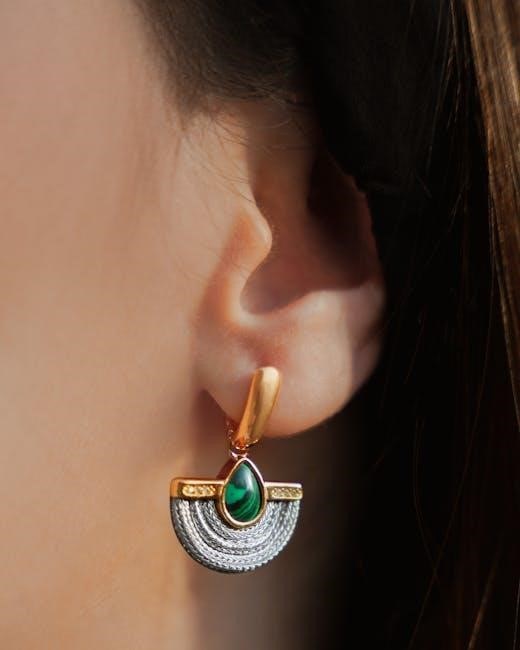
Hoop earring sizing is determined by its diameter‚ measured in millimeters (mm) or inches. Smaller hoops‚ ranging from 25-30mm (1-1.2 inches)‚ are considered huggies‚ closely following the earlobe’s curve – perfect for a subtle‚ everyday look. Medium hoops‚ around 38-50mm (1.5-2 inches)‚ offer a balanced style‚ suitable for both casual and more dressed-up occasions.
Larger hoops‚ exceeding 50mm (2 inches)‚ make a bold fashion statement. The ideal size depends on face shape and personal preference. Smaller faces often benefit from smaller to medium hoops‚ while larger faces can carry off larger diameters.
Remember that the thickness of the hoop also impacts its visual weight. Thinner hoops appear more delicate‚ while thicker hoops offer a more substantial presence. Canva templates often illustrate these size differences for visual guidance.
Earring Gauge Sizes for Piercings
Earring gauge refers to the thickness of the post‚ measured in gauge (G). Lower numbers indicate thicker posts. The most common sizes for initial and standard piercings are 20G‚ 18G‚ and 16G. A 20G (0.8mm) is frequently used for initial earlobe piercings‚ being the thinnest and most comfortable for healing.
18G (1mm) is a popular choice for lobe piercings‚ offering a balance between comfort and durability. It’s versatile enough for various earring styles. 16G (1.2mm) is also widely used‚ providing a slightly more substantial feel and being suitable for cartilage piercings as well.
It’s crucial to use the correct gauge to avoid irritation or damage to the piercing. Starting with a higher gauge (thinner) and gradually increasing it is generally recommended. Always consult a professional piercer for guidance on appropriate sizing.
20G (0.8mm) Gauge: Initial Piercings
20 Gauge (0.8mm) is the most delicate and commonly recommended size for initial earlobe piercings. This thinner gauge facilitates easier insertion and minimizes trauma to the newly pierced tissue‚ promoting faster and more comfortable healing. It’s ideal for those experiencing their first piercing‚ as it’s generally well-tolerated.

Using a 20G post reduces the risk of irritation and allows the piercing to settle properly. While it’s a thinner option‚ it’s still durable enough for everyday wear with appropriate jewelry materials like surgical steel or titanium.
However‚ it’s important to note that 20G may not be suitable for all piercings‚ particularly cartilage‚ which requires a more robust gauge. Always follow the advice of a professional piercer regarding the best gauge for your specific piercing location and individual needs.
18G (1mm) Gauge: Common for Lobe Piercings
18 Gauge (1mm) represents a slight increase in thickness compared to 20G‚ making it a very common choice for standard earlobe piercings. This gauge offers a balance between comfort and durability‚ suitable for both initial piercings and those looking to upgrade from a thinner gauge.
The slightly larger diameter provides a more secure fit for earrings and allows for a wider variety of jewelry styles. It’s often preferred by individuals who find 20G too delicate or who desire a more substantial feel.
While still considered relatively thin‚ 18G is strong enough to withstand daily wear and tear. It’s a versatile option that accommodates various materials‚ including gold‚ silver‚ and surgical steel. Consulting a piercer ensures the best fit and minimizes potential irritation during the transition.
16G (1.2mm) Gauge: Versatile and Popular
16 Gauge (1.2mm) is a widely favored choice‚ celebrated for its versatility and popularity amongst piercing enthusiasts. Offering a noticeable step up in thickness from 18G‚ it strikes an excellent balance between being substantial enough for diverse jewelry and remaining comfortable for extended wear.
This gauge is particularly well-suited for individuals seeking a more secure hold for heavier earrings or those prone to bending thinner posts. It’s a popular selection for cartilage piercings as well‚ providing added support.
The 1.2mm diameter accommodates a broad spectrum of earring designs and materials‚ from delicate studs to bolder statement pieces. While generally well-tolerated‚ transitioning to 16G should be done gradually to avoid discomfort. Always prioritize professional guidance for a seamless and safe experience.
Diamond Earring Size Guide: Total Carat Weight (TCW)
Total Carat Weight (TCW) represents the combined weight of both diamonds in a pair of earrings‚ a crucial factor when considering size and sparkle. While carat weight significantly impacts price‚ it doesn’t directly correlate to visual size. A larger carat weight doesn’t automatically mean a larger-appearing diamond on the earlobe.
Understanding TCW helps establish expectations. For example‚ a 0.50 TCW pair will appear more subtle than a 1.00 TCW pair. However‚ the cut quality and setting style also influence perceived size. A well-cut diamond reflects light brilliantly‚ enhancing its apparent size.
When selecting diamond earrings‚ consider both TCW and the corresponding diameter in millimeters to visualize the actual size on your ear. Aurika Gems provides helpful charts illustrating this conversion‚ aiding in informed decision-making.
Visualizing Diamond Sizes: Carat to Diameter Conversion
Converting carat weight to diameter (in millimeters) is essential for accurately visualizing diamond earring size. Carat weight measures weight‚ while diameter dictates the visible size on the earlobe. A simple chart helps bridge this gap‚ offering a clearer understanding of what to expect.
Generally‚ a 0.50 carat diamond typically measures around 3.0mm in diameter‚ while a 1.00 carat diamond is approximately 5.0mm. As carat weight increases‚ so does the diameter‚ but the relationship isn’t linear. Factors like cut quality influence how large a diamond appears.
Aurika Gems provides a valuable resource for this conversion‚ allowing you to compare different carat weights and their corresponding diameters. This visual aid ensures your choice aligns with your desired aesthetic‚ preventing surprises upon arrival.
Choosing Stud Earring Sizes for Different Looks

Selecting the right stud earring size dramatically impacts your overall style. Smaller studs‚ around 3-4mm‚ offer a subtle‚ classic look perfect for everyday wear and professional settings. They’re understated yet elegant‚ complementing any outfit without being overpowering.
For a more noticeable statement‚ consider studs in the 5-6mm range. These are versatile enough for both casual and semi-formal occasions‚ adding a touch of sparkle and personality. Larger studs‚ 7mm and above‚ are ideal for special events or when you want to make a bold fashion statement.
Tyaani Jewellery emphasizes that size truly matters; not every stud suits every ear or occasion. Consider your earlobe size and shape – larger lobes can handle bigger studs‚ while smaller lobes benefit from more delicate designs. Experiment to find what flatters your features best!
Factors Influencing Earring Size Choice
Several key factors influence the ideal earring size. Ear lobe size and shape are paramount; larger lobes can visually balance bigger earrings‚ while smaller lobes are better suited to more delicate styles. The lobe’s thickness also plays a role – thinner lobes may require lighter earrings for comfort.

Face shape considerations are equally important. Those with rounder faces can benefit from longer‚ dangling earrings to create length‚ while individuals with longer faces might prefer studs or shorter hoops to add width. Angular faces often look striking with softer‚ rounder earring shapes.
Ultimately‚ personal preference and the occasion matter. A subtle stud might be perfect for daily wear‚ but a bolder size could be desired for a special event. Aurika Gems highlights that diameter is what the eye perceives‚ so prioritize that measurement!
Ear Lobe Size and Shape
Ear lobe characteristics significantly impact earring size selection. Larger earlobes generally provide a more balanced aesthetic with larger‚ more substantial earrings‚ preventing them from appearing disproportionately big. Conversely‚ smaller earlobes are often best complemented by delicate studs or smaller hoops‚ maintaining a harmonious look.
The shape of the earlobe – whether rounded‚ square‚ or elongated – also influences the choice. Rounded lobes can accommodate a wider variety of styles‚ while square lobes might benefit from earrings that soften angles. Elongated lobes can handle dangling earrings effectively.
Furthermore‚ lobe thickness is crucial for comfort. Thinner lobes may be sensitive to heavier earrings‚ necessitating lighter options. Considering these anatomical details ensures both visual appeal and comfortable wear.
Face Shape Considerations
Earring size and shape should harmonize with your face’s contours. For round faces‚ elongated earrings like drops or rectangles create length‚ avoiding circular shapes that accentuate fullness. Square faces benefit from softer‚ rounded earrings to balance angular features‚ while avoiding overly geometric designs.
Oval faces are versatile and can pull off most earring styles‚ but proportionate sizes are key. Heart-shaped faces look best with wider earrings at the bottom‚ balancing a narrower chin. Smaller studs or teardrops are also flattering.
Long faces are complemented by round or clustered earrings that add width. Ultimately‚ the goal is to create balance and enhance your natural features. Consider the overall proportion and choose earrings that complement‚ not overwhelm‚ your face.
Printable Earring Size Charts: Resources & Templates
Finding the right fit is easier with printable resources! Numerous templates are available online‚ particularly on platforms like Etsy‚ offering fully editable Canva templates for both stud and hoop earrings. These sizing cards are invaluable for jewelry businesses and personal use.
These templates typically include visual guides illustrating diameter measurements and carat weight equivalents. They often come in multiple colorways and allow for customization of text and graphics. Remember that measurements are approximate and should be adjusted based on individual preferences.
Canva provides user-friendly tools to personalize these charts‚ ensuring they align with your branding or specific needs. Utilizing these printable charts streamlines the sizing process‚ both for retail and self-assessment‚ leading to satisfied customers and confident purchases.
Canva Templates for Earring Size Guides
Canva offers a diverse range of pre-designed templates specifically for earring size guides‚ simplifying the creation of professional-looking resources. These templates are fully editable‚ allowing customization of text‚ colors‚ and graphics to match your brand aesthetic.
You’ll find options tailored for both stud and hoop earrings‚ often presented as sets. These templates typically feature clear visual representations of earring sizes‚ including diameter measurements in millimeters and carat weight indications for diamond earrings. The 2000x2000px resolution ensures high-quality printing.
Key benefits include ease of use‚ time savings‚ and the ability to create visually appealing guides without advanced design skills. Canva’s drag-and-drop interface makes adjustments straightforward‚ enabling you to create personalized sizing charts for your online store or in-person sales.
Customizing Earring Size Charts
Personalizing your earring size charts is crucial for brand consistency and accurate representation. Begin by adjusting measurements to reflect your specific inventory; remember‚ all measurements are approximate and should be verified. Modify color schemes and fonts to align with your brand identity‚ enhancing visual appeal.
Consider adding your logo and brand name prominently. Resize graphics to maintain clarity and proportion. You can duplicate elements to create variations for different earring styles – studs versus hoops‚ for example. Don’t hesitate to add descriptive text clarifying terms like ‘TCW’ (Total Carat Weight).
Ensure the final chart is easy to understand at a glance. Prioritize clear visuals and concise language. Regularly review and update the chart as your product offerings evolve‚ maintaining accuracy and customer satisfaction.
Approximate Measurements & Adjustments
Earring size charts offer a starting point‚ but remember measurements are approximate. Individual earlobe sizes and shapes vary significantly‚ necessitating potential adjustments. A 6mm stud‚ for instance‚ might appear different on varying lobes;
When using diameter measurements‚ consider the post length for studs – this impacts the overall visible size. For hoops‚ account for the thickness of the wire. Diamond carat weight doesn’t directly translate to perceived size; a larger spread can appear bigger than a higher carat weight with a smaller diameter.
Always encourage customers to measure their existing earrings or consult a professional piercer for accurate sizing. Provide a clear return/exchange policy to accommodate adjustments. Remember‚ visual guides are illustrative‚ not definitive‚ and should be used as a reference.
Earring Size for Different Occasions
Earring choices should complement the event’s formality. Everyday wear often benefits from smaller‚ more comfortable studs – 4-6mm diameter is a popular choice. These are practical and less likely to snag or cause discomfort during daily activities.

For special events‚ such as weddings or galas‚ larger‚ more statement-making earrings are appropriate. Consider diamond studs with a higher Total Carat Weight (TCW) or bolder hoop designs. A diameter of 8-12mm can add significant sparkle and sophistication.
Hoop size also adjusts with occasion; delicate‚ smaller hoops suit casual settings‚ while larger‚ more elaborate hoops are ideal for formal events. Ultimately‚ confidence and personal style should guide the final selection‚ ensuring the earrings enhance the overall look.
Everyday Wear vs. Special Events
Distinguishing between earrings for daily life and special occasions hinges on comfort‚ practicality‚ and desired impact. Everyday earrings prioritize subtlety and ease of wear. Studs in the 4-6mm range are ideal‚ minimizing snagging and maximizing comfort throughout the day. Smaller hoops‚ around 25-30mm in diameter‚ also work well for a casual look.
Special events call for bolder statements. Diamond earrings with a higher Total Carat Weight (TCW) instantly elevate an outfit. Hoops can increase in size – 50-75mm – creating a dramatic effect. Consider the neckline of your attire; larger earrings balance wider necklines.
Ultimately‚ the goal is to complement‚ not overwhelm. Everyday earrings should be understated‚ while event earrings should enhance the overall glamour and sophistication of the occasion.
Earring Size and Age Considerations

Earring choices often evolve with age‚ reflecting changing lifestyles and preferences. Younger individuals frequently embrace bolder styles – larger hoops and statement studs – reflecting current trends. Comfort is still key‚ but experimentation is common.

As we mature‚ priorities often shift towards classic elegance and comfort. Smaller‚ more refined studs become popular‚ alongside delicate hoops. Weight becomes a significant factor; lighter earrings minimize strain on earlobes‚ which can become less supportive over time.
Consideration should also be given to potential sensitivities. Hypoallergenic materials are crucial at any age‚ but particularly important for those with developing or aging skin. Ultimately‚ the best earring size is one that feels comfortable‚ secure‚ and reflects personal style‚ regardless of age.