
Cranial Nerve Tests: A Comprehensive Guide
Cranial nerve tests, often documented in PDF formats for standardized examination procedures, are vital components of a neurological assessment, evaluating the functionality of each nerve pair.
Cranial nerves represent a crucial aspect of the peripheral nervous system, though the olfactory and optic nerves are considered extensions of the brain itself. These twelve paired nerves emerge directly from the brain, bypassing the spinal cord, and are responsible for a diverse range of functions – from sensory perception like smell and vision, to motor control of facial movements and even vital functions like swallowing and balance.
Understanding their roles is paramount in neurological examination. Detailed cranial nerve tests, frequently compiled into PDF guides for clinical practice, allow healthcare professionals to systematically assess each nerve’s integrity. These assessments help pinpoint the location of neurological lesions, aiding in accurate diagnoses of conditions ranging from stroke and tumors to multiple sclerosis and Bell’s palsy. The systematic approach outlined in these PDF resources ensures a thorough and reliable evaluation.
A comprehensive understanding of cranial nerve anatomy and physiology is essential for interpreting test results effectively, and these PDF guides often include detailed anatomical illustrations and functional explanations.
The 12 Cranial Nerves: An Overview
The twelve cranial nerves are designated by Roman numerals, each with specific functions. I (Olfactory) governs smell; II (Optic) handles vision; III (Oculomotor), IV (Trochlear), and VI (Abducens) control eye movement. V (Trigeminal) manages facial sensation and chewing; VII (Facial) controls facial expressions and taste. VIII (Vestibulocochlear) is responsible for hearing and balance.
IX (Glossopharyngeal) aids in swallowing and taste; X (Vagus) regulates internal organs and swallowing; XI (Accessory) controls neck and shoulder movement; and XII (Hypoglossal) manages tongue movement. Detailed cranial nerve tests, often found in readily available PDF resources, systematically assess each nerve’s function.
These PDF guides typically present the nerves in order, outlining specific testing procedures for each. Understanding the function of each nerve is crucial for interpreting results and localizing neurological deficits. Clinical examination relies heavily on these standardized protocols, ensuring a consistent and thorough assessment, as detailed in many cranial nerve tests PDF documents.
Importance of Cranial Nerve Examination
A comprehensive cranial nerve examination is paramount in neurology, providing crucial diagnostic information. Assessing these twelve nerve pairs helps pinpoint the location of lesions affecting the brainstem, cerebral cortex, or peripheral nerves. Detailed cranial nerve tests, frequently compiled into PDF guides for clinical use, allow for systematic evaluation.
These examinations are vital in diagnosing conditions like stroke, tumors, multiple sclerosis, and Bell’s palsy. Abnormalities detected during testing can indicate specific neurological deficits, guiding further investigations. Many PDF resources offer standardized protocols, ensuring consistent and reliable results.
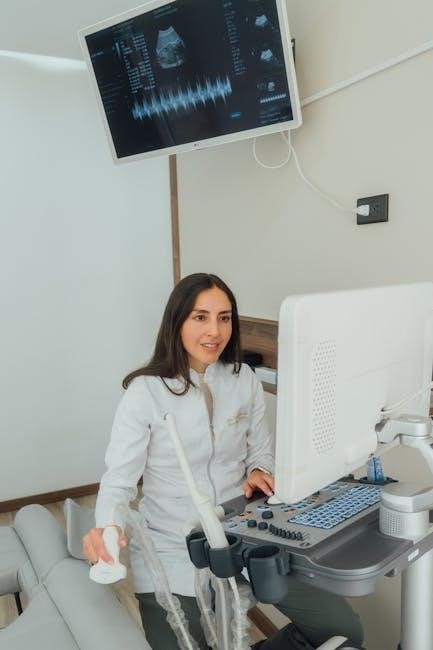
Furthermore, the cranial nerve examination aids in monitoring disease progression and evaluating the effectiveness of treatment. Access to well-structured cranial nerve tests PDF materials is essential for both medical students and experienced clinicians, facilitating accurate diagnosis and patient care. A thorough assessment is a cornerstone of neurological practice.
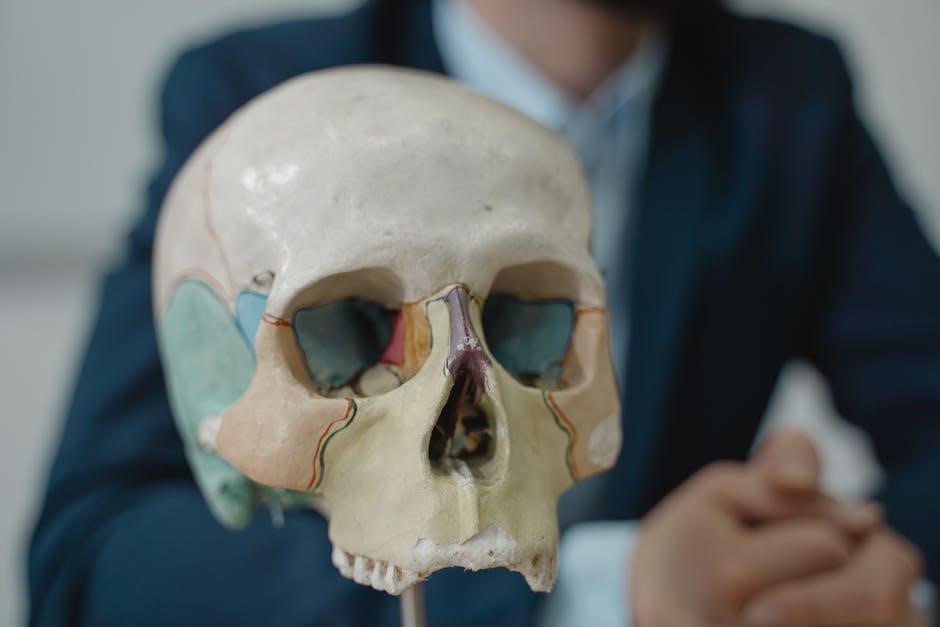
Detailed Examination Procedures
Detailed cranial nerve tests, often found in PDF guides, require a systematic approach, following established protocols for accurate assessment and reliable neurological findings.
Testing Cranial Nerve I: Olfactory Nerve
Assessment of the olfactory nerve, frequently detailed in cranial nerve tests PDF resources, involves evaluating a patient’s ability to identify common odors. This test requires ensuring nasal patency – confirming the nostrils are not blocked – before proceeding. Typically, the examiner presents several non-irritating scents, like coffee, vanilla, or cinnamon, to each nostril individually, while the patient keeps their eyes closed.
The patient is asked to identify the odor, or if they can detect any smell at all. It’s crucial to avoid using substances that could stimulate the trigeminal nerve (like ammonia) as this can create a false positive. Each nostril should be tested separately, and the patient should be instructed to occlude one nostril at a time. Documentation should include whether the patient can detect the odor, identify it correctly, or if there’s any anosmia (loss of smell) or hyposmia (reduced smell) present. A PDF guide will often include standardized odor strips for consistent testing.
Testing Cranial Nerve II: Optic Nerve
Evaluation of the optic nerve, comprehensively outlined in many cranial nerve tests PDF guides, assesses visual acuity, visual fields, and pupillary responses. Visual acuity is typically tested using a Snellen chart, assessing each eye individually and then both together. Following acuity testing, visual fields are assessed by confrontation, where the examiner compares the patient’s peripheral vision to their own.
Pupillary responses – specifically, the pupillary light reflex – are then evaluated. This involves shining a light into each eye and observing the direct and consensual constriction of the pupils. A PDF resource will often detail the expected findings and potential abnormalities. Fundoscopic examination, using an ophthalmoscope, allows visualization of the optic disc and retina, looking for signs of papilledema or other optic nerve pathology. Documentation should include visual acuity measurements, visual field deficits, and pupillary response findings.
Testing Cranial Nerve III, IV, and VI: Oculomotor, Trochlear, and Abducens Nerves
Assessing cranial nerves III, IV, and VI, detailed in cranial nerve tests PDF protocols, focuses on evaluating extraocular movements and pupillary function. Begin by observing for ptosis (drooping eyelid), a potential sign of oculomotor nerve (III) weakness. Then, instruct the patient to follow a moving target (like a finger) in all directions of gaze – up, down, and diagonally – observing for any limitations or double vision (diplopia).
Specific attention should be paid to testing the superior oblique muscle (trochlear nerve – IV) by asking the patient to look down and inward. The abducens nerve (VI) is assessed by testing lateral gaze. PDF guides emphasize documenting any nystagmus (involuntary eye movements) observed. Pupillary responses, already assessed with CN II, are re-evaluated as CN III controls pupillary constriction. Findings should be meticulously recorded, noting any deficits in eye movement or pupillary function.
Testing Cranial Nerve V: Trigeminal Nerve
Evaluation of the trigeminal nerve (V), as outlined in comprehensive cranial nerve tests PDF resources, involves both sensory and motor components. Sensory testing assesses the three branches: ophthalmic, maxillary, and mandibular. Light touch and pain sensation are tested bilaterally on the forehead, cheek, and jaw, comparing sides for any deficits. Corneal reflex testing, using a wisp of cotton, evaluates afferent limb function.
Motor function is assessed by palpating the masseter and temporalis muscles during clenching of the jaw, noting strength and symmetry. The jaw jerk reflex can also be elicited. PDF guides highlight the importance of documenting any asymmetry or loss of sensation. A thorough examination differentiates between central and peripheral lesions. Careful observation and precise recording of findings are crucial for accurate neurological assessment.
Sensory Examination of the Trigeminal Nerve
The sensory portion of the trigeminal nerve (V) assessment, detailed in cranial nerve tests PDF protocols, systematically evaluates the ophthalmic (V1), maxillary (V2), and mandibular (V3) divisions. Light touch sensation is tested using cotton wool, comparing symmetrical responses across the forehead, cheek, and jaw. Pinprick sensation assesses pain perception, again comparing both sides. Temperature sensation can also be included for a more complete evaluation.
Crucially, the corneal reflex tests the afferent limb of V1; a diminished or absent reflex suggests dysfunction. PDF guides emphasize testing each division individually and documenting any hypoesthesia, hyperesthesia, or anesthesia. Patient reports of facial numbness or tingling are vital. Accurate localization of sensory deficits aids in identifying the lesion’s location – peripheral, central, or within the nerve itself.
Motor Examination of the Trigeminal Nerve
The motor component of the trigeminal nerve (V), as outlined in comprehensive cranial nerve tests PDF resources, assesses the muscles of mastication. Palpate the masseter and temporalis muscles while the patient clenches their teeth, noting strength and symmetry. Observe for any atrophy or fasciculations. Ask the patient to open their mouth against resistance to evaluate the pterygoid muscles.
Jaw jerk reflex testing, though less commonly performed, can reveal upper motor neuron lesions; it’s documented in detailed PDF guides. The examiner lightly taps the jaw with a reflex hammer. A brisk or absent reflex warrants further investigation. Document any weakness, asymmetry, or involuntary movements.
Careful observation during these maneuvers, coupled with precise documentation, is crucial for accurate neurological assessment. PDF checklists often include specific grading scales for muscle strength.
Testing Cranial Nerve VII: Facial Nerve
Evaluation of the facial nerve (VII), detailed in many cranial nerve tests PDF guides, involves assessing both the upper and lower facial muscles. Begin by observing facial symmetry at rest. Ask the patient to perform a series of movements: raise eyebrows, close eyes tightly (checking for complete closure and Bell’s phenomenon – upward and outward rotation of the eye), puff out cheeks, smile, and frown.
Note any asymmetry or weakness in these movements. The PDF resources emphasize differentiating between upper and lower motor neuron lesions; upper motor neuron lesions typically spare the forehead muscles. Assess taste on the anterior two-thirds of the tongue using sweet, sour, or salty solutions.
Finally, evaluate the patient’s ability to produce sounds, as the facial nerve innervates the stapedius muscle. Thorough documentation, often aided by standardized forms found in PDF formats, is essential.
Testing Cranial Nerve VIII: Vestibulocochlear Nerve
Assessment of the vestibulocochlear nerve (VIII), comprehensively outlined in cranial nerve tests PDF materials, requires evaluating both its cochlear (hearing) and vestibular (balance) branches. Begin with hearing acuity using whispered voice tests, comparing bilaterally. Weber and Rinne tests, utilizing a tuning fork, are crucial for differentiating conductive versus sensorineural hearing loss, as detailed in PDF protocols.
Vestibular function is assessed through observation of gait and balance. The Romberg test, where the patient stands with feet together and eyes closed, helps identify balance deficits.
Further evaluation may involve the Dix-Hallpike maneuver to assess for benign paroxysmal positional vertigo (BPPV). PDF guides often include diagrams illustrating proper technique. Document any nystagmus observed, noting its direction and characteristics. A complete examination, guided by PDF checklists, ensures thorough assessment.
Advanced Considerations
Detailed cranial nerve tests PDF resources emphasize accurate interpretation, documentation, and reporting of findings, alongside understanding complex presentations like diplopia and related neurological deficits.
Understanding Diplopia and its Relation to Cranial Nerves
Diplopia, or double vision, is a frequent symptom investigated during cranial nerve tests, often detailed within comprehensive PDF guides for neurological assessment. The underlying principle for analyzing diplopia, as outlined in specialized resources, centers on the direction of image separation. This separation is maximized along the line of action of the weakened muscle responsible for eye movement.
Specifically, the false image observed is displaced in the direction opposite to the paretic muscle’s primary action. This diagnostic clue directly links to the functionality of cranial nerves III (oculomotor), IV (trochlear), and VI (abducens), which control extraocular movements. A cranial nerve exam PDF will often illustrate how specific nerve palsies manifest as distinct patterns of diplopia. For instance, an abducens nerve palsy typically causes horizontal diplopia that worsens with gaze towards the affected side.
Therefore, a thorough understanding of diplopia’s characteristics, coupled with a systematic cranial nerve evaluation, is crucial for accurate localization of the neurological lesion. Detailed PDF guides provide algorithms and case studies to aid in this process, emphasizing the importance of correlating visual symptoms with objective findings from the neurological examination.
Guidelines for Accurate Interpretation
Accurate interpretation of cranial nerve tests, frequently detailed in standardized PDF protocols, demands a systematic approach and awareness of potential pitfalls. Comprehensive PDF resources emphasize the importance of performing each test meticulously, noting both positive and negative findings. Begin by establishing a baseline, comparing findings between the left and right sides, and documenting any asymmetries;
Furthermore, consider the patient’s overall clinical context. Isolated cranial nerve deficits may suggest a localized lesion, while multiple deficits could indicate a more widespread neurological process. Cranial nerve exam PDF guides often highlight common patterns associated with specific conditions. Always adhere to established guidelines issued by relevant medical authorities within your practicing country, and consult manufacturer instructions for equipment.
Remember that normal variations exist; therefore, familiarity with anatomical and physiological norms is essential. Finally, avoid premature conclusions and integrate cranial nerve findings with other neurological examination components for a holistic assessment. Thorough documentation, as outlined in PDF templates, is paramount for effective communication and follow-up care.
Documentation and Reporting of Findings
Meticulous documentation of cranial nerve tests is crucial, often facilitated by standardized report forms available as PDF templates. These PDF resources typically outline a structured format for recording observations for each nerve, including both normal and abnormal findings. Clearly articulate whether each nerve is intact, impaired, or absent, specifying the nature of any deficits – for example, weakness, sensory loss, or asymmetry.
Detailed descriptions are paramount; avoid vague terms like “slightly diminished.” Quantify findings whenever possible (e.g., visual acuity, field deficits). Include pertinent negative findings to rule out alternative diagnoses. Many cranial nerve exam PDF checklists serve as prompts to ensure completeness.
When reporting, present findings concisely and logically, adhering to established medical terminology. Highlight any significant abnormalities and their potential clinical implications. Always correlate cranial nerve findings with other neurological examination results and the patient’s overall clinical presentation. Proper documentation, often utilizing PDF-based systems, ensures continuity of care and facilitates accurate communication among healthcare professionals.
Practical Aspects
Utilizing cranial nerve tests PDF checklists streamlines the examination process, ensuring a systematic approach and comprehensive assessment of neurological function during patient evaluations.
Preparation for the Cranial Nerve Examination
Prior to commencing the cranial nerve examination, thorough preparation is essential for accurate and reliable results. Reviewing patient history, including any neurological symptoms or relevant medical conditions, provides crucial context. Accessing and familiarizing yourself with a cranial nerve tests PDF checklist ensures all components are systematically addressed, minimizing omissions.
Gathering necessary equipment, such as a penlight, visual acuity chart, smell jars, and a tongue depressor, streamlines the process. Ensuring a quiet and well-lit environment optimizes testing conditions. Briefly explaining the procedure to the patient, obtaining informed consent, and addressing any anxieties fosters cooperation and reduces apprehension. Remembering the “WIPE” acronym – Wash hands, Introduce yourself, Patient identification, and Permission – establishes a professional and respectful approach. A well-prepared examiner contributes significantly to a successful and informative neurological assessment, ultimately aiding in accurate diagnosis and treatment planning.
Patient Positioning and Comfort
Optimizing patient positioning and ensuring comfort are paramount during a cranial nerve examination. Generally, a seated position is preferred, allowing for clear visualization and facilitating cooperation. However, adjustments may be necessary based on the specific nerve being tested or the patient’s physical limitations. A comfortable chair with adequate back support promotes relaxation and minimizes extraneous movements that could interfere with accurate assessment.
Referencing a cranial nerve tests PDF guide can highlight positioning nuances for each nerve. For example, assessing extraocular movements requires the patient to fixate on a target while following the examiner’s finger. Maintaining eye level with the patient fosters rapport and facilitates observation. Addressing any discomfort or concerns expressed by the patient throughout the examination is crucial. A relaxed and cooperative patient yields more reliable results, contributing to a more accurate neurological evaluation and ultimately, better patient care.
Equipment Needed for a Thorough Examination
A comprehensive cranial nerve examination requires a relatively modest, yet essential, set of tools. A good penlight is indispensable for assessing pupillary responses and facial sensation. Snellen chart or a visual acuity card is needed for evaluating visual acuity, detailed in many cranial nerve tests PDF resources. Olfactory stimuli, such as coffee grounds or familiar scents, are required for testing the olfactory nerve.
Additionally, a tuning fork (typically 512 Hz) is crucial for assessing auditory function. Cotton-tipped applicators are used for light touch sensation testing. A tongue depressor aids in assessing gag reflex and tongue movements. Documentation materials, including a pen and examination form, are vital. Access to a PDF checklist ensures no step is missed. Finally, hand hygiene supplies are essential for maintaining a sterile environment and preventing cross-contamination throughout the procedure.
OSCE Checklist for Cranial Nerve Examination
Prior to commencing the cranial nerve examination within an OSCE setting, ensure thorough preparation, often guided by cranial nerve tests PDF checklists. Begin by introducing yourself to the patient, confirming their identity, and obtaining informed consent. Wash hands meticulously and gather necessary equipment – penlight, visual acuity chart, olfactory stimuli, tuning fork, and tongue depressor.
Systematically assess each cranial nerve, documenting findings clearly. Remember WIPE – Wash, Introduce, Permission, Examine. Test olfactory function, visual acuity and fields, pupillary responses, extraocular movements, facial sensation and movement, hearing, gag reflex, and tongue movements. Conclude by thanking the patient and summarizing your findings. Many OSCE PDF guides emphasize a structured approach and accurate documentation for optimal performance. Always adhere to safety and ethical guidelines throughout the examination.