
This guide familiarizes owners with the 2011 Jeep Grand Cherokee’s features, offering a digital owner’s manual, navigation guides, and warranty details in PDF format.
Authentic OEM documentation provides easy access to procedures and specifications, ensuring a comprehensive understanding of vehicle operation and maintenance.
Vehicle Overview & Purpose of the Manual
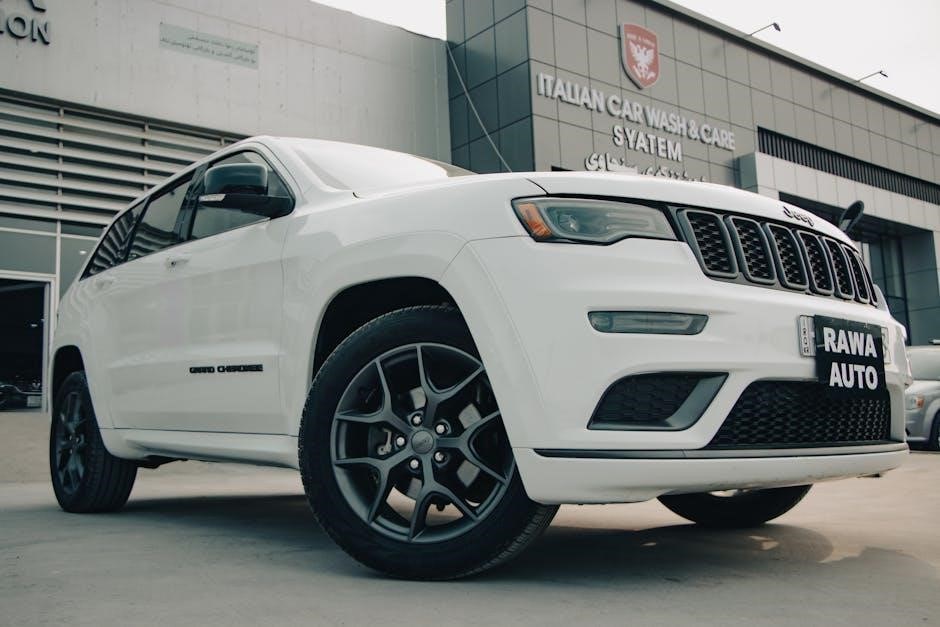
The 2011 Jeep Grand Cherokee represents a sophisticated mid-size SUV, offering a blend of capability and comfort. Available with a 3.6L V6 or a powerful 5.7L V8 engine, coupled with an automatic transmission, it caters to diverse driving needs. Drivetrain options include both 2WD and 4WD systems, enhancing versatility.

This owner’s manual serves as a crucial resource, designed to provide comprehensive guidance on operating and maintaining your vehicle. It’s supplemented by warranty information and customer-focused documents. The digital format, accessible via DVD or online PDF, includes the Owner’s Manual, Navigation/Media Center Manuals, and warranty booklets.
Its purpose is to ensure safe, efficient, and enjoyable ownership, offering detailed instructions and specifications tailored to your specific 2011 Grand Cherokee model.
Important Safety Precautions
Prioritize safety when operating your 2011 Jeep Grand Cherokee. Always familiarize yourself with all warning labels and indicators before driving. Ensure proper use of seating and safety restraint systems – seatbelts are crucial for all occupants.
Never operate the vehicle under the influence of drugs or alcohol. Distracted driving, including cell phone use, significantly increases accident risk. Regularly check fluid levels and tire pressure to maintain optimal vehicle performance and safety.

Be aware of the vehicle’s capabilities and limitations, especially in adverse weather conditions. Understand jump-starting procedures and towing information for emergency situations. This manual provides vital information; careful reading is essential for safe operation.

Understanding Your Vehicle
Explore the 2011 Jeep Grand Cherokee’s core components: engine specs, transmission details, and drivetrain options – 2WD or 4WD – for optimal performance.
Engine Specifications (3.6L V6, 5.7L V8)
The 2011 Jeep Grand Cherokee offered drivers a choice between two powerful engine options, catering to diverse performance needs and preferences. The standard engine was a 3.6-liter Pentastar V6, delivering a balance of fuel efficiency and robust power output. This engine provided ample capability for everyday driving and moderate towing requirements.
For those seeking enhanced performance and towing capacity, a 5.7-liter HEMI V8 engine was available. This larger displacement engine generated significantly more horsepower and torque, making it ideal for demanding tasks and challenging terrains. Both engines were paired with a sophisticated automatic transmission, optimizing gear selection for smooth and efficient operation. Detailed specifications, including horsepower, torque, and compression ratios, are outlined in the comprehensive owner’s manual.
Transmission System Details (Automatic)
The 2011 Jeep Grand Cherokee exclusively featured an automatic transmission across all trim levels and engine options. This transmission was designed for smooth, responsive shifting and optimized performance, enhancing the overall driving experience. The specific automatic transmission utilized was a five-speed automatic, engineered to handle the power output of both the 3.6L V6 and the 5.7L V8 engines effectively.
The transmission incorporates advanced features like AutoStick, allowing drivers to manually select gears for greater control in specific driving situations. Regular maintenance, including fluid checks and replacements as detailed in the owner’s manual, is crucial for ensuring the longevity and optimal function of the transmission system. Proper care will contribute to reliable performance for years to come.
Drivetrain Options (2WD & 4WD)
The 2011 Jeep Grand Cherokee offered drivers a choice between two drivetrain configurations: rear-wheel drive (2WD) and four-wheel drive (4WD). The 2WD system provides efficient operation for on-road driving, while the 4WD systems enhance traction and capability in challenging conditions like snow, mud, or sand.
Several 4WD systems were available, including Quad-Trac I and Quad-Trac II. Quad-Trac I is a full-time 4WD system, while Quad-Trac II adds a low-range gear for increased torque in demanding off-road scenarios. The owner’s manual details the proper operation of each system and provides guidance on selecting the appropriate mode for various terrains. Understanding these options is key to maximizing the vehicle’s performance and safety.
Key Features & Controls
Explore the 2011 Grand Cherokee’s interior controls, instrument panel, seating, and advanced audio/navigation systems detailed within this manual for optimal use.
Interior Controls & Instrument Panel
The 2011 Jeep Grand Cherokee’s interior boasts a user-friendly layout, with controls logically positioned for ease of access. This section of the owner’s manual details each function, from climate control and lighting to power windows and door locks.
Understanding the instrument panel is crucial for safe operation. The manual provides a comprehensive explanation of all gauges, indicators, and warning lights, including fuel level, engine temperature, and vehicle speed. Learn to interpret these signals promptly to address any potential issues.
Furthermore, this guide covers the operation of the steering wheel-mounted controls, allowing you to manage audio, cruise control, and other features without taking your hands off the wheel. Detailed diagrams and step-by-step instructions ensure a clear understanding of each control’s function.

Seating & Safety Restraint Systems
The 2011 Jeep Grand Cherokee prioritizes passenger safety, featuring advanced seating and restraint systems. This section of the owner’s manual provides detailed instructions on proper seat adjustment, head restraint positioning, and the correct use of all safety belts.
Understanding the operation of the child restraint system is paramount. The manual outlines the proper installation procedures for child safety seats, adhering to all relevant safety standards. It also details the location of LATCH anchors and tether straps.
Additionally, this guide explains the functionality of the vehicle’s airbag system, including frontal, side, and curtain airbags. Learn about airbag deployment, safety precautions, and potential risks. Proper usage of these systems is vital for maximizing passenger protection during a collision.
Audio & Navigation System Overview
The 2011 Jeep Grand Cherokee’s audio and navigation systems offer a connected and convenient driving experience. This section of the owner’s manual details the operation of the radio, CD player, MP3 compatibility, and available satellite radio features.
Navigation system instructions cover map display, destination entry, route calculation, and voice guidance. Learn how to utilize points of interest, traffic updates, and system settings for optimal navigation. The manual also explains Bluetooth connectivity for hands-free calling and audio streaming.
Troubleshooting tips are included for common audio and navigation issues. Understand how to update the navigation system’s maps and software. Explore customization options to personalize your audio and navigation preferences for a tailored driving experience.
Maintenance & Service
This section details the recommended maintenance schedule, fluid checks, tire care, and service procedures for your 2011 Jeep Grand Cherokee, per the manual.
Recommended Maintenance Schedule
Following the recommended maintenance schedule is crucial for ensuring the longevity and optimal performance of your 2011 Jeep Grand Cherokee. The owner’s manual outlines specific intervals for various services, categorized by mileage or time, whichever comes first.
Essential services include regular oil and filter changes, tire rotations, and fluid level checks (coolant, brake fluid, power steering fluid, and windshield washer fluid). Inspections of belts, hoses, and the exhaust system are also vital.
More extensive maintenance, such as spark plug replacement, air filter replacement, and transmission fluid changes, are scheduled at higher mileage intervals. Adhering to this schedule, detailed within the manual, helps prevent costly repairs and maintains your vehicle’s warranty coverage.
Fluid Checks & Replacements
Regularly checking and maintaining proper fluid levels is essential for the 2011 Jeep Grand Cherokee’s reliable operation. The owner’s manual details the location and procedure for checking engine oil, coolant, brake fluid, power steering fluid, transmission fluid, and windshield washer fluid.
Replacements should occur at the intervals specified in the maintenance schedule. Using the correct type of fluid, as indicated in the manual, is critical. Incorrect fluids can cause damage to components.
Pay close attention to coolant levels, as overheating can lead to severe engine damage. Inspect brake fluid for contamination and replace it as recommended. Proper fluid maintenance contributes significantly to vehicle safety and performance.
Tire Information & Maintenance
The 2011 Jeep Grand Cherokee’s owner’s manual provides crucial tire information, including recommended tire sizes, pressures, and load ratings. Maintaining correct tire pressure, found on the vehicle’s tire placard, optimizes handling, fuel efficiency, and tire lifespan.

Regularly inspect tires for wear, damage, and uneven tread patterns. Rotate tires according to the recommended schedule to ensure even wear. The manual details proper rotation procedures. Check for cuts, bulges, or embedded objects.
Proper tire maintenance enhances safety and performance. Adhering to the recommended maintenance schedule and using appropriate tires contributes to a smoother, safer driving experience. Always replace tires in pairs or all four for balanced handling.

Troubleshooting & Emergency Procedures
The 2011 Jeep Grand Cherokee manual details jump-starting, towing, and identifies warning lights, offering guidance for roadside assistance and emergency situations.
Jump Starting Procedures
Before attempting a jump start, ensure both vehicles are in Park or Neutral with parking brakes engaged. Connect the positive (+) cable to the disabled vehicle’s positive terminal, then to the assisting vehicle’s positive terminal.
Next, connect the negative (-) cable to the assisting vehicle’s negative terminal, and finally to a grounded metal surface on the disabled vehicle – avoid the negative battery terminal.
Start the assisting vehicle and let it run for a few minutes. Then, attempt to start the disabled vehicle. If it doesn’t start immediately, wait a few more minutes and try again. Disconnect cables in the reverse order of connection after a successful jump start.
Consult the 2011 Jeep Grand Cherokee owner’s manual for specific battery location and safety precautions.
Towing Information & Procedures
When towing your 2011 Jeep Grand Cherokee, always use appropriate towing equipment rated for the vehicle’s weight. Consult the owner’s manual for specific towing capacity limits based on engine and drivetrain configuration.
Properly attach the tow hitch and safety chains, ensuring they are securely fastened. Verify the trailer wiring is correctly connected to the vehicle’s electrical system for functioning lights.
During towing, maintain a safe speed and allow for increased stopping distances. Regularly inspect the tow hitch, chains, and wiring for any signs of wear or damage. Refer to the manual for detailed instructions on flat towing or using a tow dolly.
Always prioritize safety and follow local towing regulations.
Warning Lights & Indicators
The 2011 Jeep Grand Cherokee’s instrument panel features various warning lights and indicators. Refer to your owner’s manual for a complete explanation of each symbol and its corresponding meaning.
Critical warning lights, such as the check engine light, oil pressure light, and brake warning light, require immediate attention. Ignoring these could lead to serious vehicle damage.
Other indicators provide information about system status, like the four-wheel-drive engagement or low fuel level. Familiarize yourself with these to proactively address potential issues.
A flashing indicator often signifies a more urgent problem than a steady light. Consult the manual for specific troubleshooting steps and seek professional assistance if needed.
Technical Specifications
This section details the 2011 Jeep Grand Cherokee’s dimensions, capacities, and electrical system specifics, as outlined in the official manual.
Dimensions & Capacities
The 2011 Jeep Grand Cherokee’s dimensions and capacities are crucial for understanding its capabilities and limitations. The owner’s manual provides detailed specifications regarding overall length, width, and height, essential for parking and navigating various terrains.
Interior space is also thoroughly documented, including passenger volume and cargo capacity with both rear seats up and folded down. Fuel tank capacity is clearly stated, aiding in trip planning and range estimation. Towing capacity varies based on engine and drivetrain configuration, and the manual offers specific guidance;
Weight specifications, such as curb weight and gross vehicle weight rating (GVWR), are vital for safe operation and load management. These details, found within the official documentation, ensure owners can utilize their vehicle effectively and responsibly.
Electrical System Details
The 2011 Jeep Grand Cherokee’s electrical system is comprehensively outlined in the owner’s manual, detailing the battery’s location, type, and maintenance recommendations. Fuse box diagrams are included, illustrating the location of each fuse and its corresponding circuit protection. Understanding these diagrams is crucial for addressing electrical issues.
The manual also specifies the alternator’s output and provides guidance on jump-starting procedures, ensuring safe operation. Wiring schematics, while potentially complex, offer insight into the system’s architecture for advanced troubleshooting. Details regarding the vehicle’s various electrical components, like the starter and lighting systems, are also provided.
Proper use and maintenance of the electrical system, as described in the documentation, are vital for reliability and longevity.
Warranty Information
The 2011 Jeep Grand Cherokee owner’s manual details warranty coverage, roadside assistance programs, and associated booklets for new vehicle owners.
Reviewing these documents carefully ensures understanding of your vehicle’s protection and available support services.
Warranty Coverage Details
The 2011 Jeep Grand Cherokee is covered by a comprehensive warranty package, detailed within the owner’s manual and accompanying warranty booklets. This includes a basic limited warranty protecting against defects in materials and workmanship for a specified period. A powertrain limited warranty extends coverage to key engine and transmission components, offering longer-term peace of mind.
Additionally, corrosion protection is included, safeguarding against rust and corrosion damage. Specific warranty durations and mileage limitations are clearly outlined in the official documentation. Roadside assistance is also provided for a defined period, offering support for unexpected breakdowns or emergencies. Owners should carefully review the warranty details to understand their rights and responsibilities, ensuring maximum benefit from their vehicle’s coverage.
Roadside Assistance Programs
The 2011 Jeep Grand Cherokee offers valuable roadside assistance programs for new vehicle purchasers. In the U.S., 24-Hour Towing Assistance is included, providing support for situations like breakdowns, flat tires, or lockouts. Canadian purchasers receive Roadside Assistance, offering similar services. These programs are designed to minimize inconvenience and ensure driver safety when unexpected issues arise.
Coverage typically includes towing to the nearest authorized Jeep service center, jump-start assistance, fuel delivery (if stranded due to an empty tank), and lockout service. The owner’s manual details specific program terms, conditions, and contact information for accessing these services. It’s crucial to understand the coverage area and any limitations to maximize the benefits of this valuable support system.