
Korky Fill Valve Instructions: A Comprehensive Guide
Navigating toilet repairs often leads to Korky fill valves, known for reliability. Replacing a faulty valve, or its diaphragm, is straightforward,
avoiding constant cycling and ensuring a full tank.
Understanding Korky Fill Valves
Korky fill valves are a popular choice for toilet repair and replacement, lauded for their durability and ease of installation. Unlike older “ballcock” designs, Korky valves utilize a more modern, diaphragm-based mechanism. This system regulates water flow into the tank, responding to the float’s position to maintain the correct water level.
A common issue arises when the diaphragm leaks, causing the valve to cycle on and off repeatedly, often resulting in a tank that doesn’t fill completely. This constant cycling wastes water and can be quite noisy. Korky valves are designed to address these problems, offering a reliable solution for maintaining efficient toilet operation. They are frequently preferred over Fluid Master alternatives by experienced plumbers and property managers due to their consistent performance and longevity. Understanding this core functionality is key to successful installation and troubleshooting.
Identifying Korky Fill Valve Models
Korky offers a range of fill valve models, each designed to suit different toilet types and installation needs. While a universal design exists, variations cater to specific tank configurations and water pressure levels. Key distinctions lie in the valve’s height, adjustability, and connection type. Some models feature side-inlet connections, while others are top-inlet.
Identifying the correct model is crucial for a proper fit and optimal performance. Pay attention to the valve’s overall height, ensuring it won’t interfere with the tank lid. Consider whether you need a valve with a flexible height adjustment to accommodate varying tank sizes. When replacing an existing Korky valve, noting the model number can simplify the selection process. Compatibility with existing tank gaskets and mounting nuts is also important; ensure the new valve utilizes the same components or that appropriate replacements are available.
Tools Required for Installation
Successfully installing a Korky fill valve requires a few essential tools to ensure a smooth and efficient process. A adjustable wrench is paramount for loosening and tightening the water supply line and mounting nut. Channel-lock pliers can assist with gripping and maneuvering various components. A flathead screwdriver is useful for removing the valve cap and adjusting the float.
Beyond these basics, a small bucket or towel is vital for catching any residual water during disconnection. Having a utility knife handy can help with cutting away old sealant or debris. For stubborn connections, a bit of penetrating oil can be beneficial. While not always necessary, a hacksaw might be needed if an old handle is seized, as experienced by some DIYers. Finally, a flashlight can illuminate tight spaces within the tank, aiding visibility during installation and adjustment.
Removing the Old Fill Valve
Before installing the new Korky fill valve, complete removal of the old unit is crucial. Begin by taking off the plastic cap located on top of the existing fill valve; this often reveals access to the diaphragm. Loosen the locking nut connecting the fill valve to the tank – an adjustable wrench is ideal here. Carefully disconnect the water supply line from the valve’s inlet.
Once disconnected, gently lift the entire fill valve assembly out of the tank. Inspect the area for any remaining washers or gaskets, removing them to ensure a clean mounting surface. If the old handle is stuck, as sometimes happens, a hacksaw might be necessary to carefully cut through it. Pay attention to how the old valve is oriented for easier replication with the new one. Remember to have a bucket handy to catch any remaining water within the tank and valve during this process.
Shutting Off the Water Supply
Prior to any toilet repair, including Korky fill valve replacement, completely shutting off the water supply is paramount. Locate the shut-off valve, typically found on the wall or floor near the toilet. Turn the valve clockwise until it’s firmly closed – do not force it. After closing the valve, flush the toilet to empty the tank as much as possible.
Even with the valve closed, some residual water will remain in the supply line. Place a bucket or towel under the connection point where the water supply line connects to the toilet fill valve to catch any drips. It’s also wise to have a sponge available for quick cleanup. Double-check that the water is indeed off by attempting another partial flush; if water continues to flow, re-examine the shut-off valve for proper closure or consider shutting off the main water supply to your home as a precaution.
Disconnecting the Water Supply Line
With the water supply shut off and the tank mostly drained, carefully disconnect the water supply line from the bottom of the old fill valve. Use an adjustable wrench, but be gentle to avoid damaging the valve or the supply line. Have a bucket and towels readily available, as some water will inevitably spill out during disconnection.
The connection is often a compression fitting or a threaded connection. For compression fittings, loosen the nut securing the line. For threaded connections, turn the nut counterclockwise. Once loosened, carefully detach the supply line. Inspect the supply line for wear and tear; if it appears damaged or corroded, it’s best to replace it with a new one during the installation process. Remember to keep a close watch for any remaining water in the line and have your bucket positioned accordingly.
Removing the Old Fill Valve Assembly
After disconnecting the water supply line, it’s time to remove the old fill valve assembly from the toilet tank. Locate the large plastic nut underneath the tank that secures the fill valve. This nut can be quite tight, so use an adjustable wrench for leverage. Be careful not to crack the porcelain tank while tightening or loosening the nut – a little padding with a cloth can help.
Once the nut is loosened, you should be able to gently wiggle the fill valve assembly free from the tank. There might be a rubber gasket between the valve and the tank; carefully remove this gasket as well. Inspect the area where the old valve was seated, cleaning away any debris or mineral buildup. This ensures a good seal for the new valve. Discard the old fill valve and gasket, preparing for the installation of the new Korky valve.
Installing the New Korky Fill Valve
With the old valve removed and the tank opening clean, you can begin installing the new Korky fill valve. First, carefully position the rubber gasket onto the new valve’s base, ensuring it’s properly seated to create a watertight seal. Insert the fill valve assembly into the tank opening from underneath.
Hand-tighten the large plastic nut that secures the valve to the tank. Once hand-tight, use an adjustable wrench to give it an additional quarter to half turn, ensuring a snug fit, but avoid over-tightening which could damage the tank. Connect the refill tube to the overflow tube inside the tank; this directs water to refill the bowl after flushing. Double-check that all connections are secure before proceeding to reconnect the water supply line.

Attaching the Fill Valve to the Tank
Securing the Korky fill valve to the toilet tank requires precision to prevent leaks. Begin by carefully inserting the valve assembly through the tank’s fill valve opening from beneath. Ensure the rubber gasket is correctly positioned on the valve’s base, creating a watertight barrier against the porcelain.
Hand-tighten the large mounting nut onto the valve stem, working from inside the tank. Once snug, use an adjustable wrench for a final quarter to half turn – avoid excessive force to prevent cracking the tank. A properly tightened nut is crucial for a leak-proof connection. Verify the valve sits level and doesn’t wobble, indicating a secure attachment. This step is foundational for successful operation and prevents frustrating water loss.
Connecting the Water Supply Line
With the fill valve securely attached, connecting the water supply line is the next critical step. Before connecting, inspect the supply line for any cracks or wear, replacing it if necessary. Carefully thread the supply line connector onto the fill valve’s threaded shank, hand-tightening initially to avoid cross-threading.
Use an adjustable wrench to gently tighten the connection another half to three-quarters of a turn, ensuring a firm, leak-proof seal. Avoid over-tightening, which can damage the valve or the supply line. Slowly turn the water supply valve back on, monitoring the connection for any signs of leakage. If leaks appear, tighten slightly further, but cautiously. A secure connection is vital for reliable water flow and prevents potential water damage.
Adjusting the Float Height

Proper float height adjustment is crucial for optimal toilet performance. The float controls the water level in the tank, and incorrect adjustment leads to either insufficient water for a flush or constant overflow. Korky fill valves typically feature an adjustment mechanism, often a screw or clip, to raise or lower the float.
Begin by flushing the toilet and observing the water level. If the water level is too low, gradually raise the float using the adjustment mechanism. Conversely, if the water overflows, lower the float. Make small adjustments and flush the toilet after each change to assess the results. The ideal water level should be approximately one inch below the overflow tube. Fine-tune the float height until the toilet flushes effectively and the tank fills without overflowing, ensuring efficient water usage and preventing potential water waste.
Korky Fill Valve Troubleshooting
Encountering issues with your Korky fill valve is common, but often easily resolved. Common problems include continuous running, leaking, or low water pressure. A constantly running toilet frequently indicates a faulty diaphragm, causing the valve to fail to shut off completely. Inspect the diaphragm for wear or damage and replace if necessary.
Leaks at the base of the valve often stem from a loose mounting nut or a deteriorated gasket. Tighten the nut or replace the gasket to eliminate the leak. Low water pressure can be caused by debris obstructing the valve’s inlet or a partially closed shut-off valve; Clean the inlet screen and ensure the shut-off valve is fully open. If issues persist, consider a complete fill valve replacement, as internal components may be beyond repair, restoring efficient toilet operation.
Fill Valve Leaking at the Base
A leak at the base of your Korky fill valve is a frequent issue, typically stemming from a compromised seal between the valve body and the toilet tank. The primary culprits are a loose mounting nut or a degraded rubber gasket. Begin by carefully tightening the mounting nut – avoid over-tightening, as this could crack the tank.
If tightening doesn’t resolve the leak, the gasket is likely the source of the problem. Replacing the gasket is a straightforward process; ensure you obtain a compatible Korky gasket for your model. Before installing the new gasket, inspect the mounting surface on both the tank and the valve for any debris or irregularities that could hinder a proper seal. Applying a small amount of plumber’s grease to the gasket can aid installation and improve the seal’s longevity, preventing future leaks.

Fill Valve Not Shutting Off
A Korky fill valve continuously running indicates a problem with its internal mechanisms, most commonly a faulty diaphragm. This diaphragm regulates water flow, and when compromised, it fails to create a proper seal, leading to constant refilling. The cycle of filling and draining occurs as water fills the float enclosure, raising the float prematurely and triggering repeated shut-off attempts.

Diagnosing this issue often involves removing the plastic cap on top of the fill valve to inspect the diaphragm for tears or damage. Replacing the diaphragm is a cost-effective solution, but if the problem persists, a complete fill valve replacement is recommended. Consider that mineral buildup can also interfere with the valve’s operation; cleaning the valve components can sometimes restore functionality. If you’ve repaired hundreds of toilets, you know a full valve replacement is often the most reliable long-term fix.
Low Water Pressure Issues
Experiencing low water pressure when flushing, even with a newly installed Korky fill valve, can stem from several sources beyond the valve itself. While Korky valves are generally efficient, restricted water supply lines are a frequent culprit. Check for kinks or blockages in the supply line connecting to the toilet tank, and ensure the shut-off valve is fully open.
Sediment buildup within the fill valve itself can also reduce flow. Disconnect the supply line and carefully inspect the valve’s inlet screen for debris. Cleaning this screen can significantly improve water pressure. If the issue persists, consider the overall household water pressure; a problem affecting the entire plumbing system requires professional attention. Remember, Korky valves perform best with adequate incoming pressure, and consistently low pressure can shorten their lifespan.
Korky Fill Valve Parts and Compatibility
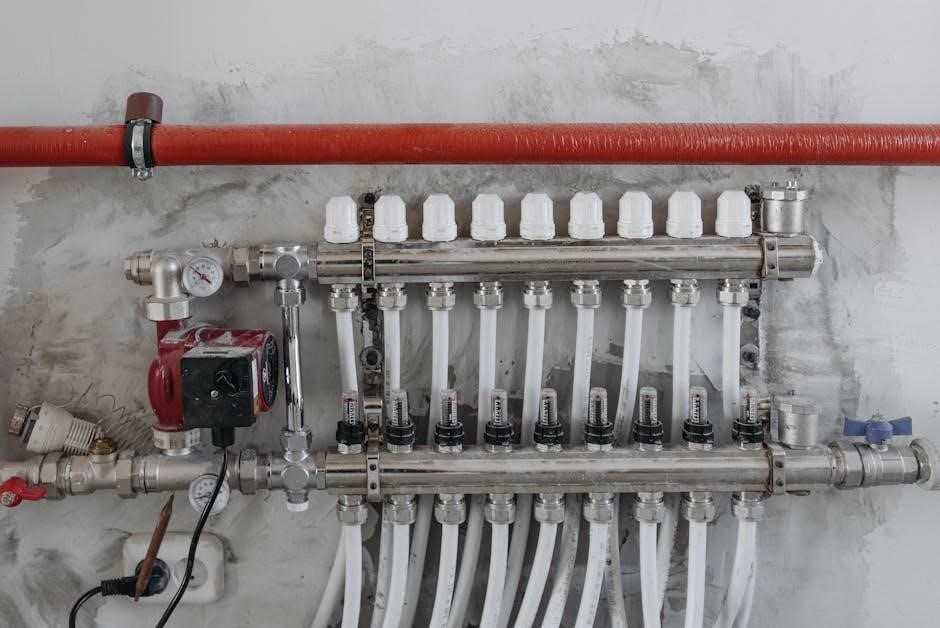
Korky offers a range of replacement parts designed for compatibility across various toilet models, though verifying fit is crucial. Common replacement parts include diaphragms, float assemblies, and gaskets. When selecting a Korky gasket, ensure it matches the tank’s mounting nut size; some tanks require Mansfield-specific replacements, as standard Korky gaskets may be too large.

Korky handles come in different installation styles – side or top-mount – so choosing the correct type is essential for a secure fit. Universal Korky fill valves aim for broad compatibility, but older or less common toilet designs might necessitate specific adapters or modifications. Always consult Korky’s compatibility charts or packaging information before purchasing parts. Using non-Korky parts may void warranties and potentially lead to leaks or malfunctions, highlighting the importance of genuine Korky components.
Korky Gasket Compatibility
Ensuring proper Korky gasket compatibility is vital for a leak-free toilet seal. Standard Korky tank gaskets are designed to fit most toilets, but variations exist. Some toilets, particularly older Mansfield models, require specific replacement gaskets due to differences in the mounting nut dimensions; A standard Korky gasket might be too large, failing to create a watertight seal around the nut.
When replacing a gasket, carefully examine the existing one and compare it to the new Korky gasket. Pay close attention to the inner diameter, ensuring it aligns with the mounting nut’s size. If unsure, consult Korky’s compatibility guides or consider purchasing a universal gasket kit that includes multiple sizes. A poorly fitted gasket will inevitably lead to water leakage, potentially causing water damage and requiring further repairs. Prioritize accurate gasket selection for long-term toilet performance.
Korky Handle Types and Installation
Korky fill valve handles come in various configurations, primarily side-mount and top-mount designs. Identifying the correct type is crucial before installation. A common issue arises when a side-mount handle is mistakenly used for a top-mount application, resulting in an incorrect angle and operational difficulty. Carefully inspect the existing handle or the toilet’s design to determine the appropriate type.
Installation typically involves inserting the handle into the valve stem and securing it with a retaining clip or nut. Ensure the handle moves smoothly and effortlessly controls the water flow. If resistance is encountered, double-check the alignment and ensure the handle is fully seated. A properly installed handle allows for precise water level adjustment, preventing overflows or incomplete fills. Replacing a broken handle restores full control over the toilet’s flushing mechanism, maintaining optimal performance.
Replacing the Diaphragm
A leaking diaphragm is a frequent cause of fill valve malfunction, often manifesting as a constantly cycling toilet. Water seeps into the float enclosure, prematurely shutting off the water supply before the tank fully fills. This cycle repeats, wasting water and creating noise. Replacing the diaphragm is a cost-effective solution, often avoiding the need to replace the entire fill valve.
To replace the diaphragm, begin by shutting off the water supply and draining the tank. Remove the plastic cap on top of the fill valve to access the diaphragm. Carefully detach the old, deteriorated diaphragm and install the new one, ensuring a proper seal. Reassemble the valve, turn the water supply back on, and observe for leaks. A correctly installed diaphragm will eliminate the cycling issue and restore normal toilet operation. This simple repair extends the life of your Korky fill valve and conserves water.
Korky Fill Valve Maintenance
Regular maintenance extends the lifespan of your Korky fill valve and prevents common issues. Periodic cleaning is crucial; mineral deposits and sediment can accumulate, hindering proper operation and causing leaks. Flush the tank periodically to remove debris. Inspect the valve for any signs of wear or corrosion, paying close attention to the diaphragm and seals.
Consider using a toilet bowl cleaner designed to minimize mineral buildup. Avoid harsh chemicals that could damage the valve components. When replacing parts, always opt for genuine Korky replacements to ensure compatibility and performance. Proactive maintenance, like checking the float height and ensuring the water supply line is securely connected, can prevent costly repairs down the line. A little preventative care ensures years of reliable operation from your Korky fill valve, saving you water and money.
Cleaning the Fill Valve

Regularly cleaning your Korky fill valve is essential for optimal performance and longevity. Begin by shutting off the water supply to the toilet. Flush the tank to empty it completely. Locate the fill valve and carefully disconnect the water supply line. Gently remove any visible debris or sediment from the valve’s exterior using a soft cloth.
For internal cleaning, carefully disassemble the valve, referring to your model’s specific instructions. Inspect the diaphragm for buildup and gently clean it with a mild detergent and water. Rinse thoroughly to remove any soap residue. Check the small ports and openings within the valve body for obstructions and clear them with a small brush or toothpick. Reassemble the valve, ensuring all parts are properly seated. Reconnect the water supply line and slowly turn the water back on, checking for leaks.

Preventative Measures to Extend Lifespan
Proactive maintenance significantly extends the life of your Korky fill valve. Regularly check the water supply pressure; excessive pressure can strain the valve components. Consider installing a water pressure regulator if needed. Periodically inspect the valve for any signs of leaks or corrosion, addressing them promptly to prevent further damage.
Flush the toilet regularly to prevent sediment buildup within the tank and valve. Avoid using harsh chemical cleaners in the toilet bowl, as these can degrade the valve’s rubber parts. When replacing the flapper, opt for a Korky flapper to ensure compatibility and optimal sealing. Finally, familiarize yourself with your specific Korky model’s instructions and recommended maintenance schedule. Consistent, minor upkeep will save you from costly repairs and ensure years of reliable operation.